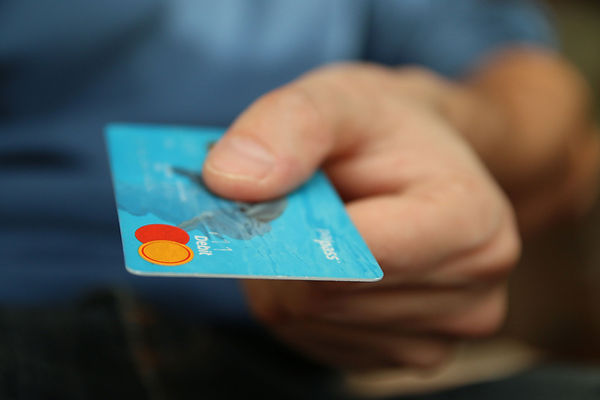
A cashless society is one in which financial transactions do not involve cash. Instead, all transactions are made electronically, using debit or credit cards, or payment services like PayNow, PayLah, and Apple Pay. Due to advancements in technology as well as lifestyle changes, cash is going out of style and is getting used less and less (“A Cashless Society”). Becoming a cashless society has its pros and cons. Depending on your perspective, going cash-free can be more beneficial than problematic. However, some may argue that the downsides of a society without cash outweigh its benefits. They argue that electronic payments compromise privacy and expose users to cyber threats (“Should We Become”). In their view, a cashless society would result in greater economic inequality (Pritchard). Furthermore, they also argue that access to funds would be impacted by technology problems and system malfunctions (Pritchard). Despite the many arguments put forward in favour of not going cashless, many nations have already started moving toward a cashless society by promoting e-payments due to its benefits of convenience, lower crime rates, and access to extensive data (Pritchard).
Firstly, going cashless is more convenient for individuals, businesses, and governments. A cash transaction takes an average of six to seven seconds, while a contactless transaction takes only one to two seconds to process (“Insight Report”). This makes buying processes much quicker and simpler since going cashless does not involve counting out of cash or making change. It allows you to buy whatever you want whenever you want, without having to look for an ATM or wait in line at a bank to withdraw cash. A banking system is not necessarily required for cashless systems to function. This would be beneficial to the lower-income households, or those who live in rural areas and lack access to banks. This is because with the presence of mobile money platforms, they can pay bills without needing a bank account, which often requires a minimum amount of money in the account to avoid any fees and to maintain it (Rowley). The value of cash also diminishes over time, due to inflation. Furthermore, banks impose charges and fees like ATM withdrawal fees, which create significant burden for low and middle-income individuals (“Banking and Poverty”). In addition, the COVID-19 pandemic has also accelerated consumer payment behaviour to shift away from cash toward cashless payments (Ashton). People were afraid of getting infections from the use of cash, and new habits developed from pandemic restrictions also led to the change in payment behaviour (Wisniewski et al.). As more physical businesses shut down due to the pandemic, only those who managed to adapt from cash to cashless will survive. The use of digital wallets had increased significantly, “rising 44% from 13% in 2019 to 19.8% in 2020” (Ashton). The growth of e-commerce during this period meant that cashless payment options offered become more important than ever as it can create more ways to reach a consumer and provide services for purchases, delivery, and exchanges, which also affects consumer experience (Ashton). This shows that businesses that can adopt cashless transactions will survive as it is more convenient for consumers. Moreover, people who are unable to meet during the pandemic can continue with the tradition of festive gifting, using e-hong baos for example. Every year, approximately 100 million new notes are issued for festive periods, by the Monetary Authority of Singapore (“Reduce Use of”). After the festive period, a large proportion of new notes gets returned by the public (“Reduce Use of”). This results in the need to destroy new notes since it far exceeds normal circulation demand (“Reduce Use of”). This impacts the environment negatively due to the carbon emissions from the production to the destruction of new notes each year (“Reduce Use of”). Hence, the use of digital red packets would not only bring the convenience of not having to queue for new banknotes, but it is also better for the environment. Businesses can also benefit from processing fees when consumers use their apps and services for cashless transactions (Pritchard). Handling cash is also expensive, so moving towards a cashless society would be more efficient as it makes transactions easier to track, and saves time and resources spent protecting large amounts of cash and moving money around (Pritchard). For example, the Irish government estimates that the cost of producing, distributing, and protecting cash and checks amounts to about 1.4% (or S$940 million) of the country's Gross National Product (Hartung). As cashless payments are more convenient, and shopping becomes much easier, spontaneous buying is encouraged (Hartung). The higher demand for goods and services results in more jobs being created which can boost economic growth (Hartung).
Secondly, going cashless would result in the reduction of crime rates as there is no tangible money to steal. Carrying cash around makes you an easy target for criminals, increasing your vulnerability to robbery and theft. Once the money is taken away from you, it is extremely challenging and almost impossible to track the cash or prove your ownership of it (Pritchard). Banknotes are more attractive to criminals since they cannot be followed the way digital exchanges can, so it tends to end up in the black market (Rowley). A study by German and American researchers found that assault and burglary in Missouri dropped by 9.8% after shifting payments for social welfare benefits from cash to cashless, since the amount of cash available to be taken or used illegally was reduced (“Less Cash, Less Crime”). Cashless transactions leave an automated paper trail which helps law enforcement “track the movement of criminal suspects and detect criminal behaviour” since most cashless payment systems leave digital records of when and where a purchase was made, and what was bought (“Should We Become”). By virtue of being traceable, a digital paper trail also deters fraud, illegal employment, terrorist financing, tax evasions, and money laundering (Rowley)(“A Cashless Society”). Illegal transactions like drug operations or illegal gambling become harder when the source of funds is recorded and become identifiable (Pritchard). Another thing to note is that even if your credit card or smartphone gets stolen, most companies provide theft protection, which ensures that you would not be liable for any transactions made by the criminal using your card or mobile wallet app (“Should We Become”). For example, at DBS Bank, stolen card liability is limited to $100 only. In addition, banks like DBS provides online services that allow victims who have their card stolen, to block their card and request for a replacement immediately (“Lost or Stolen Card”).
Although the fact that going cashless might compromise privacy may be true, the benefit of having access to useful data for analysis and policy improvement outweighs this concern. The anonymity of using cash appeals to those who are concerned that corporations and/or the governments could use data like “purchasing histories to track, monitor, and intimidate us” (“Should We Become”). On the other hand, such data can be used by public officers to analyse and improve policies (Hartung). Research by MasterCard has found that “identifying and predicting patterns of commercial activity” is made possible using payments data (Hartung). This can result in “better urban planning for transportation, housing and energy management” (Hartung). According to the Ministry of Manpower, more than 97% of employers were paying salaries electronically to their foreign workers living in dormitories, as of January 2021 (“Written Answer”). This has proven to be beneficial, especially during the COVID-19 pandemic since foreign workers can continue to receive their salaries and send money home easily despite movement restrictions (“Written Answer”). Furthermore, it reduces the chances of salary conflicts since each transaction is digitally recorded (“Written Answer”). Cashless transactions allow agencies to better track the payment of foreign workers.
To conclude, moving towards a cashless society is inevitable and unlikely to stop. Rules and regulations would be needed to ensure that the drawbacks of going cashless do not outweigh its benefits. As the COVID-19 pandemic continues to accelerate the shift from cash to cashless, we need to continue facing the risks and learn to deal with some of the difficulties of going cashless to unlock the benefits. Firstly, a cashless society will deliver more convenient transactions. Individuals can save time and indulge in e-commerce, which would in turn benefit businesses and the economy. The convenience of cashless transactions also allows companies and governments to be more efficient and reduce cash handling costs. Secondly, by virtue of being traceable, a cashless society would have lower crime rates. Lastly, less cash means more data which can be useful in improving and analysing policies. Therefore, despite the many arguments put forward in favour of not going cashless, moving towards a cashless society will continue to evolve due to its benefits of convenience, lower crime rates, and access to extensive data.
Works Cited
“A Cashless Society: Benefits, Risks, and Issues Abstract of the London Discussion.” British Actuarial Journal, vol. 23, 2018, p. e28., doi:10.1017/S1357321718000223. Accessed 10 February 2022.
Ashton, Patrick. “Cashless society: By 2024, digital wallets will eclipse all other payment methods.” The Future of Customer Engagement and Experience, www.the-future-of-commerce.com/2021/06/04/cashless-society/. Accessed 10 February 2022.
“Banking and Poverty: Why the Poor Turn to Alternative Financial Services.” Berkeley Economic Review, 15 April 2019, econreview.berkeley.edu/banking-and-poverty-why-the-poor-turn-to-alternative-financial -services/. Accessed 10 February 2022.
Hartung, Richard. “The Benefits Of Going Cashless.” Public Service Division - Challenge, 1 July 2016,
www.psd.gov.sg/challenge/ideas/deep-dive/the-benefits-of-going-cashless#:~:text=More%20spending%20equals%20economic%20growth,economic%20research%20group%20 Moody%27s%20Analytics. Accessed 10 February 2022.
“Insight Report: The Future of Consumer Payments – Contactless Cards or NFC Mobile?” Timetric, October 2016, usa.visa.com/dam/VCOM/global/about-visa/documents/cashless-infographic.pdf. Accessed 10 February 2022.
“Lost or Stolen Card.” DBS Singapore, www.dbs.com.sg/personal/support/card-issues-lost-card.html. Accessed 10 February 2022.
“Less Cash, Less Crime: Evidence From the Electronic Benefit Transfer Program." IZA: Institute of Labor Economics, p. 18., ftp.iza.org/dp8402.pdf. Accessed June 10, 2020.
Pritchard, Justin. “The Pros and Cons of Moving to a Cashless Society.” The Balance, 29 October 2021,
www.thebalance.com/pros-and-cons-of-moving-to-a-cashless-society-4160702#citation-5. Accessed 10 February 2022.
“Reduce Use of New Notes this Lunar New Year to Support the Environment.” Monetary Authority of Singapore, 28 December 2021, www.mas.gov.sg/news/media-releases/2021/reduce-use-of-new-notes-this-lunar-new-year-to-support-the-environment. Accessed 10 February 2022.
Rowley, Melissa Jun. “Cashless societies: The pros and cons.” The Newsroom, 3 March 2016, newsroom.cisco.com/feature-content?articleId=1750635. Accessed 10 February 2022.
“Should We Become a Cashless Society?.” Walden University, www.waldenu.edu/online-doctoral-programs/phd-in-public-policy-and-administration/res ource/should-we-become-a-cashless-society. Accessed 10 February 2022
Wisniewski, T.P., Polasik, M., Kotkowski, R., Moro, A., 2021. “Switching from cash to cashless payments during the COVID-19 pandemic and beyond (No. 337).” NBP Working Papers, www.nbp.pl/publikacje/materialy_i_studia/337_en.pdf. Accessed 10 February 2022.
“Written Answer by Mrs Josephine Teo Minister for Manpower to PQ on Electronic Payment of Salary.” Ministry of Manpower, 24 February 2021, www.mom.gov.sg/newsroom/parliament-questions-and-replies/2021/0224-written-answe r-by-mrs-josephine-teo-on-electronic-payment-of-salaries. Accessed 10 February 2022.
